Alstom
Alstom Bruges currently manufactures double-decker trains for the Belgian national rail provider SNCB. They work with all sorts of waste streams and face a major challenge when it comes to recycling. Nevertheless, they are making significant efforts to reduce waste and are being assisted by IBEVE, experts in the environment and safety. IBEVE is part of the IDEWE Group.
Peter De Smet is the EHS manager at Alstom Bruges, making him responsible for health, safety and the environment. Marjolein Messiaen is an external environmental coordinator at IBEVE, and is responsible for ensuring the department in Bruges complies with environmental regulations and legal requirements. Trains and trams are one of the most sustainable means of transport – and sustainability is also part of Alstom’s DNA.
“We strive to inspire all our partners to have the same goal of making environmentally friendly products. The trains we’re building here will have countless people on board in the future. With this in mind, we want to make sure everyone can travel in a safe, healthy environment," says Peter De Smet, EHS Manager at Alstom Bruges.
Eliminating any excess packaging
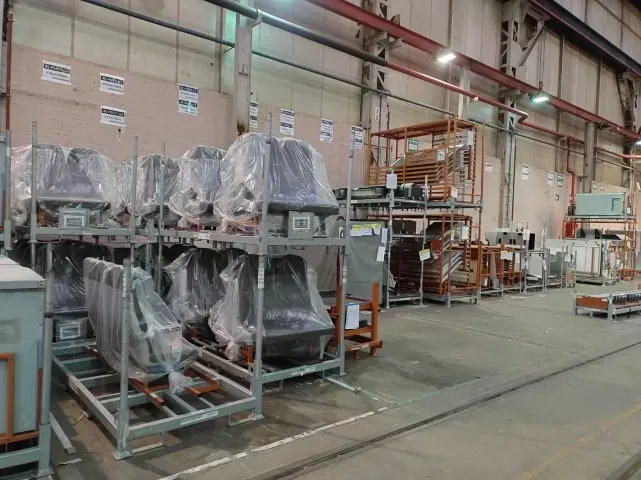
Alstom Bruges currently builds double-decker trains, which leads to complex challenges in the field of waste processing. Despite the challenges, Alstom Bruges is making a huge effort to reduce waste. One of the most important measures they have taken to reduce waste is to take a deep dive into their suppliers’ waste streams.
“A double-decker train has 8,000 different components. Each part is delivered in its own packaging by our suppliers as standard. In the past, the packaging was simply thrown away. We have tried to reduce the amount of packaging by creating transport units that suppliers can use to transport their components. This has allowed us to reduce any surplus packaging”, says Peter De Smet.
We’re looking into the materials we can collect to be recycled – and even going beyond what is required by law.
Environmental awareness in the workplace
Alstom not only focuses on their suppliers’ waste streams but also works with IBEVE to make sure their own staffsort waste correctly.
“Employees receive toolboxes and other resources, such as pictograms and photos. Several languages are used at Alstom, so things need to be clear to everyone. The employees are the heart of the company. It’s essential that they feel part of Alstom’s mission," says Marjolein Messiaen, an external environmental coordinator at IBEVE.
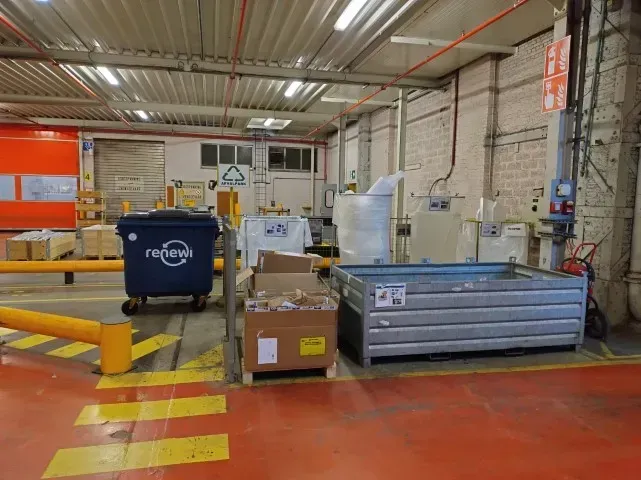
“Change is always hard. As an example, if you tell your employees to sort waste into two or three different bins instead of one all of a sudden, this requires a change in their mindset. We’ve created mini container parks so employees don’t have to take their waste far. Nevertheless, you need to repeat the rules from time to time, otherwise the habit will disappear in no time”, says Peter.
“We also have a waste collector on site full-time, which helps us in our efforts. We also work with the waste collector to check whether there are any more waste streams we can sort, such as bubble wrap. We’re looking into the materials we can collect to be recycled, and even going beyond what is required by law”, adds Marjolein.
Splitting waste streams to improve recycling
At Alstom, they strive to achieve twoimportant environmental objectives: 90% of waste must be recoverable and 80% must be recycled.
“We’re meeting our recovery target – and even exceeding it. We’re working hard to achieve our recycling target, but we’re on the right track. One such example is splitting our waste streams up even further. In total, we identified around 27 waste streams. Plastic, for instance, isn’t considered to be just one stream. We separate foil, bubble wrap, styrofoam and so on to recycle as much as possible,” says Peter.
“We also work with the waste processor to analyse the waste streams with a view to collecting certain streams separately and processing them better. Our ultimate goal is to keep the amount of residual waste as low as possible.”
We ask a lot of our employees, but it is essential that they feel part of Alstom’s mission.
Less waste, greater efficiency
Alstom also tries to reduce chemicalwaste by purchasing only the amount of chemicals they need.
“We don’t buy a one-litre canister of glue if we only need 20 millilitres for each carriage. By buying only what we need, the benefits are twofold. First, we avoid waste due to large canisters drying out if we don’t use them. Second, smaller tins are completely empty when we’ve finished with them. More efficient use leads toless waste,” says Peter.
More efficient use leads to less waste.
Partnership is a two-way street
Alstom and IBEVE have been working together since 2017, and the partnership with IDEWE has been in place since 2013. For Peter, Marjolein is the company’s font of knowledge for everything to do with the environment.
“Marjolein isn’t someone who just gives me all the information, which I then have to pass on to everyone else. She communicates directly with managers and staff on the shop floor to see how we as a prevention team can improve our sorting methods, and to offer help where it’s needed. It’s all about the interaction between IBEVE’s environmental coordinator, the waste processor and the internal prevention service. These three parties come together to form one team, and we have the space to express our opinions. It’s certainly not a one-way street”, concludes Peter.
About IBEVE
IBEVE is part of the IDEWE Group. For over thirty years, you have been able to count on our expertise in areas such as asbestos surveys, environmental management and occupational safety. Find out more about IBEVE here.