Ergonomics policy
An ergonomic working environment is about more than a comfortable chair and adjustable table. It is a carefully considered alignment of individual, task and work context. Workplace ergonomics are the key to healthy, efficient and motivated employees. But how do you translate that into a policy tailored to your organisation?
Want to tackle your ergonomics policy?
Our advisors will be pleased to meet with you to develop a tailor-made plan together.
Request your meeting with an IDEWE advisor
On this page:
What is ergonomic working?
Ergonomic working means adapting your workspaces, tools and processes to your employees’ physical and mental capacities. The goal? A safe, healthy workplace where your employees can do their work efficiently and enjoyably.
Examples:
- Designing workstations to prevent back pain
- Tasks organised intelligently to minimise repetitive movement
- Ensuring sufficient time for recovery during intensive work
What does an ergonomics policy involve?
A strong ergonomics policy is founded on four pillars:
- Garnering support
Involve both employees and managers. A shared vision and engagement are the foundations of sustainable change.
- Carrying out a risk assessment
Identify the ergonomic risks for each department and workstation. Aspects to consider include physical demands, working postures, work duration, repetitive movements and lifting tasks.
- Taking preventive measures
At three levels:- Technical - e.g. adjustable furniture
- Organisational - e.g. task rotation
- Individual - e.g. correct lifting technique
- Evaluation and adjustment
Review the measures you have taken based on your objectives. What is working well? What could be improved? Make adjustments accordingly.
Our roadmap helps you to put these four items into practice, implementing them step by step.
A sustainable ergonomics policy starts with insight
With ErgoAudit, you can discover what is working well, identify bottlenecks and receive an action plan with clear priorities.
What are musculoskeletal disorders (MSDs)?
Musculoskeletal disorders, commonly abbreviated as MSD, are complaints affecting the muscles, tendons, joints or nerves that develop gradually and can often be linked to working conditions. Examples include poor working postures, repetitive movements and insufficient recovery time.
The causes are rarely unambiguous, necessitating a broader, policy-oriented approach. Ergonomics play a key role. As an organisation, it is vital to develop a clear vision of how you want to prevent MSDs as well as through which actions and investments.
Why is an ergonomics policy important?
A properly substantiated ergonomics policy makes all the difference. For your organisation and for your employees, too.
- Reduced complaints and absenteeism - By preventing overexertion and injuries, you can reduce the number of long-term absences.
- Higher productivity - When you are working comfortably, you also work more efficiently.
- Improved reintegration - Employees with physical complaints stay employable for longer and return faster after an absence.
- Cost savings - Less downtime and turnover mean lower replacement costs and loss of expertise.
A suitable approach for every activity
IDEWE’s ergonomics approach is based on the nature of the activities performed by your employees, not on industry or job title. After all, many professions involve work of multiple kinds. For example, a surgeon may use display screen equipment (office work), stand for extended periods during operations (physical work), and assist in positioning patients (care).
That’s why we offer targeted, activity-based solutions:
- Office ergonomics
Prevent back and neck pain when working with display screen equipment. Discover how to adjust desks, chairs and monitors correctly and encourage alternating tasks.
- Ergonomics in healthcare
Carers often face significant physical demands. Examples include lifting, moving people or objects and standing for long periods. IDEWE offers guidelines and tools to prevent overexertion.
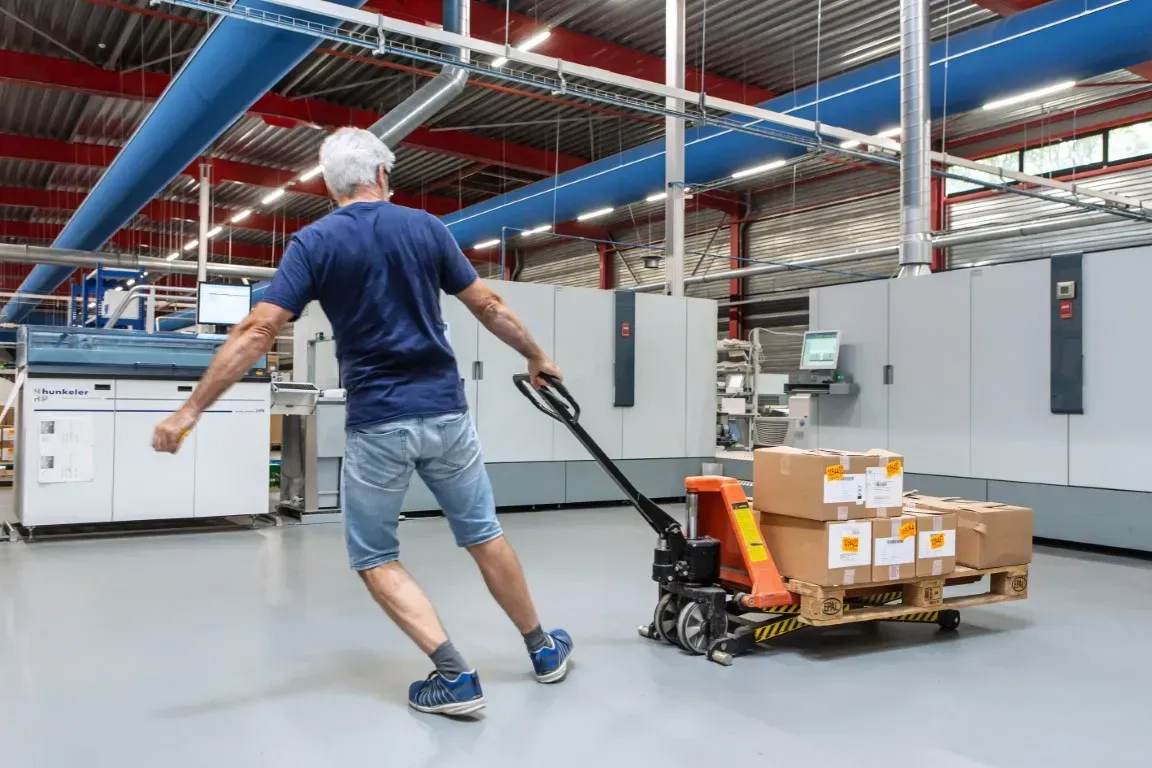
- Ergonomics of physical work
In construction, industry or logistics, repetitive and heavy tasks are common. Our experts will analyse the risks and provide advice on tools, work organisation and training.
Ensure sustainable support
With ErgoSupport, you receive regular guidance from an ergonomist who will assist your healthcare organisation in embedding lasting ergonomic improvements.