Personal protective equipment (PPE)
Safe and healthy work starts with the right equipment. Personal protective equipment (PPE) and suitable work clothes are vital in achieving that. But what exactly does this involve? What are your obligations as an employer? And how will IDEWE support you in this regard?
What is personal protective equipment and what are work clothes?
Personal protective equipment, or PPE for short, refers to pieces of equipment worn or carried by employees as protection against risks to their health and safety. Examples include a safety helmet, ear muffs, a respirator, gloves, safety shoes or a fall arrest harness. PPE can also include supplementary equipment such as barrier creams or lanyards. The purpose? To reduce the risks of an accident at work as much as possible.
Work clothes, on the other hand, mainly serve to protect employees from dirt and discomfort. Examples include coveralls or a dust coat. However, workwear that also provides protection against work-related risks, such as flame-retardant clothing for welding, is considered PPE. In that case, the same legal provisions apply as for PPE.
Different types of PPE exist:
- Respiratory protection: against harmful airborne substances such as dust, smoke, vapours and gases. Examples include dust masks and full-face respirators.
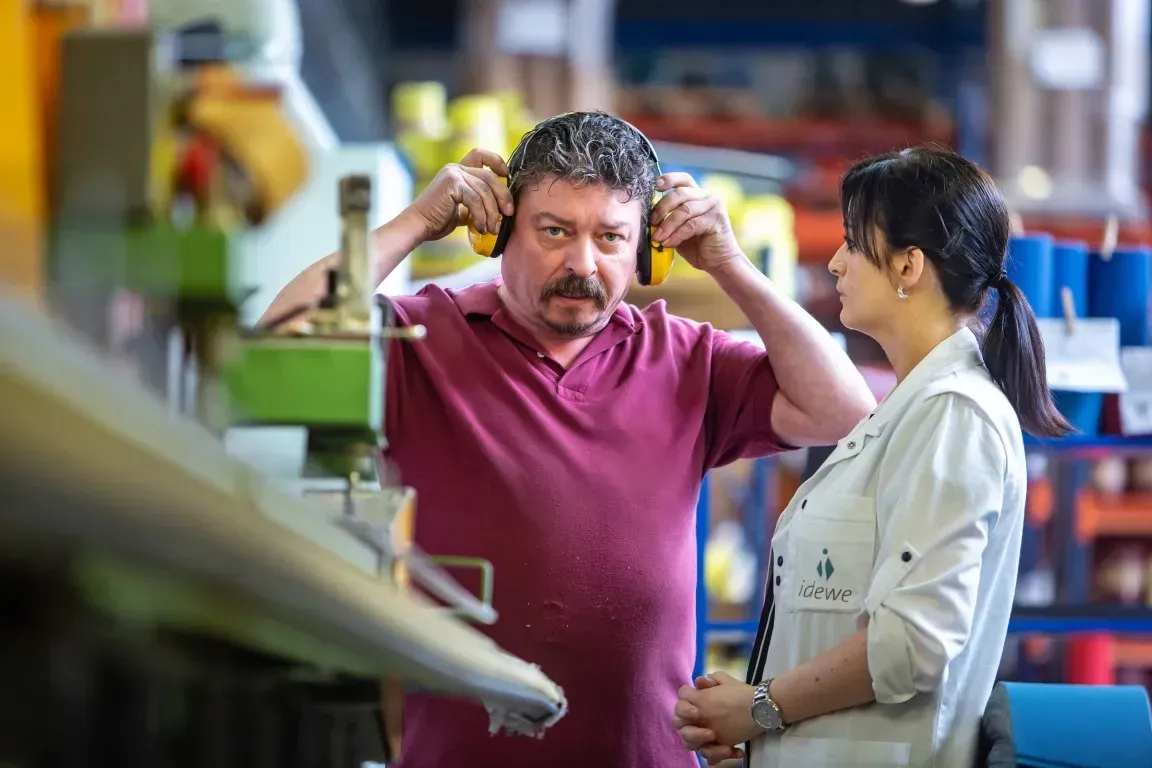
- Hearing protection: reduces noise levels to prevent hearing damage. Examples include ear buds, ear muffs and custom-moulded ear plugs.
- Hand protection: against cuts, chemicals, heat or cold. Examples include cut-resistant and heat-resistant gloves.
- Fall protection: prevents injuries when working at height. Examples include safety harnesses, lanyards and anchor points.
- Eye and face protection: against projectiles, chemicals and heat. Examples include safety goggles and face shields.
- Head protection: against head injuries due to falling objects or impacts. The safety helmet is a classic example.
- Foot protection: against impacts, punctures, slipping, heat and chemicals. There are various types of safety footwear.
It is important to do a thorough risk assessment before selecting and purchasing PPE.
Need advice on choosing and purchasing PPE or work clothes?
Our experts will guide you through the entire process.
What is the legislation regarding personal protective equipment?
As an employer, you are legally obliged to provide your employees with the necessary PPE free of charge if workplace risks cannot be eliminated or controlled in other ways. For example, situations where collective protection measures are insufficient.
Your additional obligations:
- Determining in which circumstances PPE is required
- Taking care of maintenance, cleaning, replacement and repairs
- Providing clear instructions and information
- Supervising the equipment’s proper use
PPE should always be comfortable, ergonomic and suitable for the wearer. It should not create additional risks and must be adapted to the working conditions and have a CE marking. Employees are obliged to use the PPE correctly and report any defects.
You also need to pay attention when purchasing work clothes. Clothes should not create additional risks (e.g. loose clothing around rotating machines) and must be appropriate to the season and the workplace. Always consult your prevention advisor and committee on such purchases.
Questions about PPE and workwear legislation?
Our experts will help you keep track of all the rules – and stay in compliance.
How does IDEWE support you in choosing and purchasing the right PPE and work clothes?
It can be hard to make the right choices when your options are so extensive. That’s why IDEWE offers:
- Tailored advice: our prevention advisors will offer guidance on your purchasing policy and help monitor the conformity of equipment.
- Medical advice: you are legally obliged to consult an occupational doctor each time you purchase PPE. IDEWE can provide the right medical assessments.
- Training courses: learn how to use, maintain and replace PPE correctly with our targeted training courses.