A vaccination policy to protect your organisation
A good vaccination policy protects your employees and your organisation against infectious diseases. IDEWE will support you with a tailor-made approach adapted to your industry risks. Comply with your legal obligations and invest in a healthy workplace.
On this page:
- How do vaccines work?
- Why is vaccination at work so important?
- What is a vaccination policy?
- Which vaccinations are mandatory or recommended?
- How does IDEWE help your organisation deal with vaccinations smoothly?
- What misconceptions about vaccination are there?
- How do you set up an appointment for company vaccinations?
How do vaccines work?
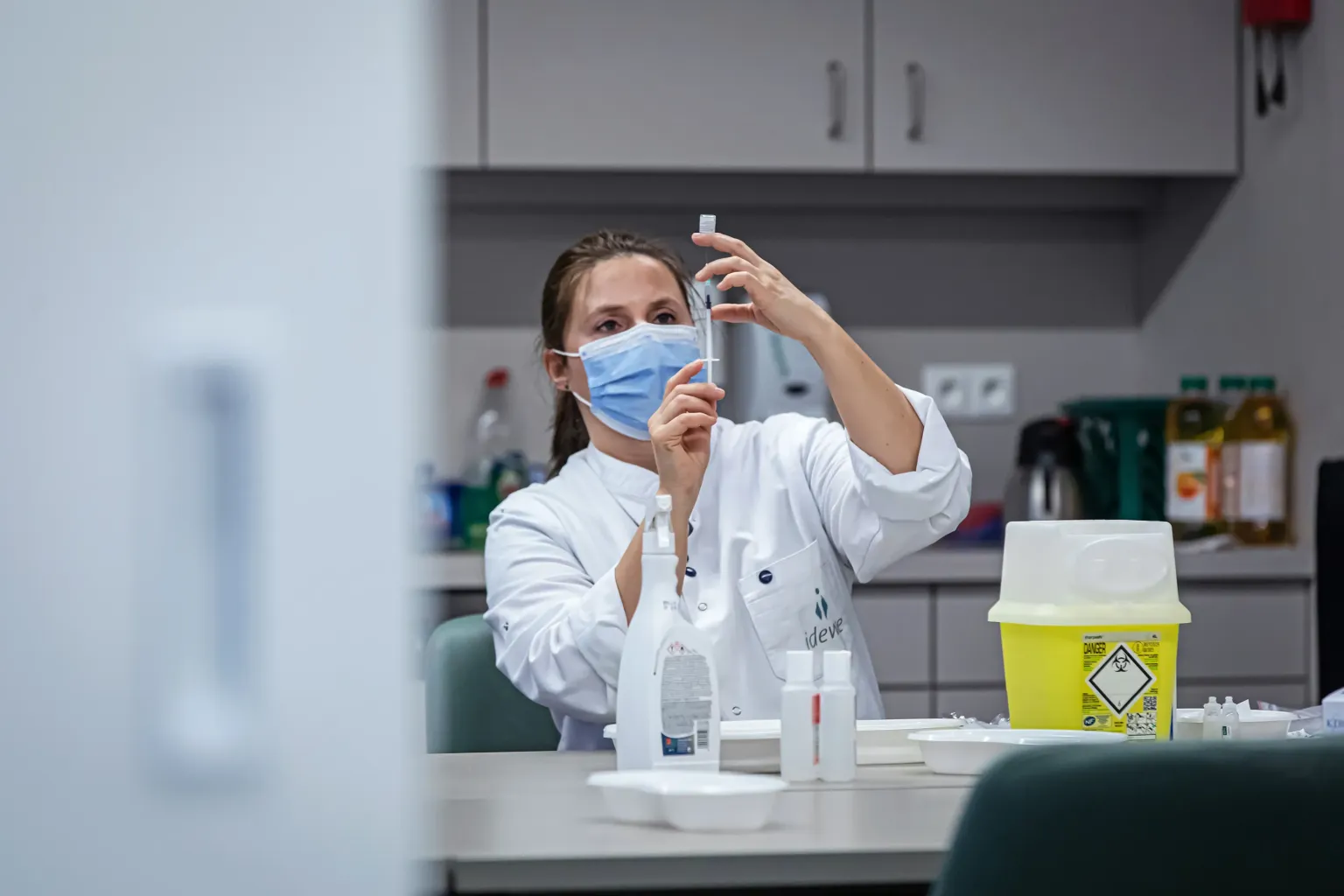
A vaccine stimulates your immune system to produce defences against viruses or bacteria without you actually becoming sick. This builds up your protection against diseases such as hepatitis B, tetanus or flu. If you do become exposed to the virus or bacteria later, your body will respond faster and more effectively.
Vaccination is a safe, effective and an essential part of infection prevention at work.
Why is vaccination at work so important?
Vaccination is a powerful form of prevention. It doesn’t just protect individual employees, but also your entire team. Investing in vaccination ensures:
- Reduced sickness absence and business continuity
- Better protection of vulnerable employees
- Fewer and milder complications for people who do fall ill
- Compliance with legal obligations for high-risk industries
IDEWE can help you develop a vaccination policy tailored to your organisation.
What is a vaccination policy?
A vaccination policy should be part of your organisation’s general wellbeing and prevention policy. It focuses on preventing the spread of infectious diseases at work. Some vaccinations are legally mandatory, while others are strongly recommended based on industry-specific risks.
Our successful campaign led to 98% of our employees getting vaccinated.
Which vaccines are mandatory or recommended?
Not every sector deals with the same risks. The risk of infection among employees varies depending on the nature of their work. This risk determines whether vaccination is mandatory or recommended.
In Belgium, only tetanus and hepatitis B vaccinations are legally mandated for certain groups of employees. Other vaccinations may be recommended depending on the risks in a specific sector or job.
The following is an overview of the most important vaccinations, the associated risk and the sectors in which they are most relevant.
| Mandatory |
|---|
|
| Recommended |
|---|
|
How does IDEWE help your organisation deal with vaccinations smoothly?
IDEWE will support your organisation from risk assessment to vaccination plan. Our approach in four clear steps:
- Risk assessment – We identify your employees’ infection risks and the legal implications.
- Registration – We track for whom vaccination is indicated.
- Prevention – We propose suitable prevention measures, such as increasing attention to hand hygiene or wearing personal protection equipment.
- Vaccination and follow-up – We arrange and monitor vaccination campaigns, for the flu for example.
What misconceptions about vaccination are there?
Vaccines make you sick
Vaccines only contain weakened or dead germs and cannot make you sick. They do stimulate your body to produce antibodies. If you become exposed to a virus right after getting vaccinated, you can still become sick.
Vaccines are not safe
Vaccines are only approved for use after extensive scientific research. The research identifies any risks and side effects. Vaccines are safe and effective.
Getting infected offers better protection than vaccination
Illness and vaccination provide similar protection levels. However, the diseases against which vaccination offers protection can have serious side effects. Especially for at-risk groups, vaccination can make a big difference.
Vaccines are expensive
Infection at work can be much more expensive than prevention. Furthermore, certain vaccines are fully or partially reimbursable. An overview is available on the Fedris website.
How do you set up an appointment for company vaccinations?
In most cases, you can make an appointment in the My IDEWE customer area (My staff) or ElectrA. If this option is not available, please contact your regional IDEWE office for help.
Why opt for IDEWE?
- Preventive approach: We believe prevention is better than cure and proactively support you in preventing downtime.
- Experienced experts: Our medical team of occupational doctors, nursing experts and prevention advisors work together to provide the support you need.
- Always near: With eleven offices across Belgium, we are always easily accessible to your organisation.